
India's VALORANT esports team has successfully qualified for the Esports Nations Cup (ENC) 2026 main event in Riyadh, emerging as one of two teams from the Asia regional qualifiers. The team, led by Sagnik Roy, overcame tough competition, including a crucial victory against Hong Kong, to secure their spot in the global tournament featuring a USD 1.5 million prize pool.

Iranian Foreign Minister Abbas Araghchi has revealed the intense psychological pressure faced by Tehran's diplomatic delegation during peace negotiations with the United States, recalling a direct exchange with US President Donald Trump's Middle East envoy, Steve Witkoff, where he questioned the envoy about the constant military threats.

The United States has announced new sanctions targeting Iran's 'shadow oil economy,' accusing Tehran of using illicit oil revenues to fund the Islamic Revolutionary Guard Corps (IRGC) and its regional activities.

Donald Trump announced he is replacing the 20% reimbursement fee for securing the Strait of Hormuz with massive trade and investment deals from Gulf States into the United States, while maintaining a full blockade on Iranian ship traffic.

When asked about Bessent's announcement allowing certain Russian oil sales to India and whether the US is considering any other moves, including tapping the Strategic Petroleum Reserve (SPR), Trump said, "If there were some, I would do it just to take a little of the pressure off."

The harsh truth is that the US is no longer a reliable partner, cautions Ramesh Menon.

Sri Lanka's President Anura Kumara Dissanayake announced that the country refused permission for the US to land two warplanes at Mattala International Airport, citing a commitment to neutrality amidst rising tensions in the Middle East.

Pakistan Prime Minister Shehbaz Sharif clarified that the recent Memorandum of Understanding (MoU) signed between the US and Iran does not include provisions regarding Tehran's ballistic missile programme. This statement followed talks with Iranian President Masoud Pezeshkian, with Sharif emphasising Iran's right to its defence capabilities and Pakistan's role as a mediator in the US-Iran peace process.

Iran has put forward a comprehensive 10-point framework that it says forms the basis of a complete resolution.

'Refiners may soon be forced to adjust operations, curtailing runs as product exports stall and directing output solely to domestic markets.'
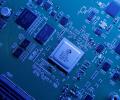
Union Minister Ashwini Vaishnaw announced that two more semiconductor chip packaging units, part of the India Semiconductor Mission, are expected to be operational by July and December, respectively. He also highlighted India's focus on becoming a beneficiary of AI technology, expanding data centre infrastructure with significant investments, and developing new subsea cable networks for global connectivity.

Indian benchmark indices, Sensex and Nifty, closed almost unchanged in a volatile session as investors reacted cautiously to mounting geopolitical headwinds and a significant jump in crude oil prices, with Brent crude surging to USD 94.68 per barrel.

Wipro's net profit in the first quarter saw minimal growth, rising less than one per cent to 3,352 crore, while revenue increased by 10.6 per cent to 24,480 crore. The IT services segment, a key metric, grew by only one per cent year-on-year, falling short of analyst estimates amidst a challenging demand environment and longer decision cycles from clients.
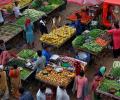
India's wholesale price inflation (WPI) increased to 9.87 per cent in June, up from 9.68 per cent in May, primarily due to significant price increases in non-food and food products, with food inflation alone rising to 5.49 per cent.

Indian wedding bookings to Sri Lanka are projected to grow 20-25 per cent annually over the next few years.

Pakistan's Prime Minister Shehbaz Sharif has offered to host talks between the US and Iran to help resolve the ongoing conflict in the Middle East, following reports of Pakistan's involvement in backchannel diplomacy.

Iran's Islamic Revolutionary Guard Corps (IRGC) has launched missile and drone strikes on four US military bases in Kuwait and Bahrain. This action is in retaliation for recent American strikes against targets in Iran, which the IRGC condemned as a "violation of commitments" and an "anti-civilian act." The IRGC has warned of an expanded "crushing response" if US aggression continues.
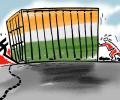
The India-Oman free trade agreement, operationalised on June 1, is set to create significant export opportunities for India's labour-intensive and value-added sectors, including textiles, gems and jewellery, and marine products, while also strengthening energy security.
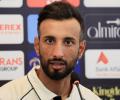
Despite calls for his ouster after the Test series defeat against Bangladesh, Pakistan skipper Shan Masood wants to continue leading the national side in the near future, sources in the PCB indicated.

Faculty recruitment is conducted directly by universities using global hiring standards while complying with Indian regulations.
India's services sector growth experienced a significant slowdown in June, reaching a 17-month low due to challenging market conditions and reduced domestic client interest, as indicated by the HSBC India Services PMI Business Activity Index.

The strike came amid the peace deal talks between two countries and a fragile ceasefire.
'In India, there is this first generation migrant, say from a small village in UP. He didn't go to the Gulf to buy a big house but make the life of his family better.' 'He may have paid 1 lakh rupees to an agent to go to the Gulf. Imagine what will happen to him and his family if he has to come back. He and his family will become poor again.' 'He went to the Gulf to come out of poverty, but this war will make his family trapped in poverty once again.'

India's exports experienced their steepest fall in five months, declining by 7.44 per cent in March to $38.92 billion, primarily due to trade uncertainty and geopolitical tensions, with shipments to West Asia contracting by over 50 per cent.

Indian benchmark indices Sensex and Nifty rebounded in early trade, tracking a recovery in global equity markets and an easing of hostilities between Israel and Iran, after a sharp fall in the previous session.

Russia has expressed strong concern over a US-Israeli strike on the Iranian port of Bandar Anzali, a key transit hub on the INSTC, warning of the risk of drawing Caspian states into the ongoing conflict.


French President Emmanuel Macron on Monday announced that France and the United Kingdom will jointly lead a multinational initiative to restore free and secure navigation in the Strait of Hormuz amid uncertainty over the virtual control of the strategic waterway between the US and Iran.

On Monday, March 9, Mojtaba Khamenei was appointed Iran's new supreme leader, succeeding his father Ayatollah Ali Khamenei.

'We caught General Pervez Musharraf talking over the phone with his Chief of General Staff Lieutenant General Mohammad Aziz. Musharraf was visiting China; Aziz was in Rawalpindi.'

The US Senate passed a resolution directing then-President Donald Trump to withdraw American forces from the conflict with Iran. This bipartisan vote, though largely symbolic as a concurrent resolution, highlighted congressional concerns over potential escalation and a desire to limit presidential military authority without legislative approval.

Delhi's Ridge, encompassing areas like Kamla Nehru Ridge, played a pivotal strategic role during the 1857 Revolt against British rule, with sites like the Flagstaff Tower, Hindu Rao's house, and Pir Ghaib serving as crucial military positions and silent witnesses to the intense fighting.

Indian equity benchmark indices Sensex and Nifty tumbled over 1 per cent for the third consecutive day, driven by a sharp rally in crude oil prices, massive selling in IT stocks, and unabated foreign fund outflows amid ongoing geopolitical tensions in the Middle East.

Indian stock market benchmarks, Sensex and Nifty, saw gains in early trading, driven by anticipation surrounding the Reserve Bank of India's monetary policy decision, despite mixed global cues and significant FII outflows.

Indian stock markets extended their gains for a third consecutive day, with the Sensex climbing 753 points and the Nifty closing above 24,550, driven by a drop in crude oil prices and optimism surrounding potential peace talks between Iran and the US.
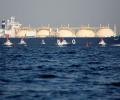
The government has withdrawn most provisions of the emergency natural gas supply regulation order imposed during the West Asia conflict after liquefied natural gas (LNG) shipments through the Strait of Hormuz resumed following a ceasefire.

East Bengal FC secured a commanding 3-0 victory against NorthEast United FC in their Indian Super League match, fueled by a second-half double from Youssef Ezzejari and a late goal by Miguel Ferreira.

Hundreds of Indian seafarers are stranded on vessels carrying crude oil, LPG, and LNG in the Persian Gulf due to the ongoing conflict in the Middle East, causing disruptions to India's energy supplies.

Indian stock market benchmark indices, Sensex and Nifty, experienced declines in early trade due to escalating tensions between the US and Iran, which led to a surge in crude oil prices and weak global equity trends.
'Why not ask for a change of leadership in Qatar, Bahrain or Saudi Arabia? Is there a constitution in Saudi Arabia? Are there elections in Saudi Arabia? Why no talk of democracy in these countries?' 'America said change the leader now, but is now ignoring the feelings of the Syrian moderate majority. Is that democracy,' asks H E Dr Riad Abbas, Syrian ambassador to India, in an interview to Cleo Paskal.
